

CNN’s Worst Fear Isn’t Low Ratings — It’s This
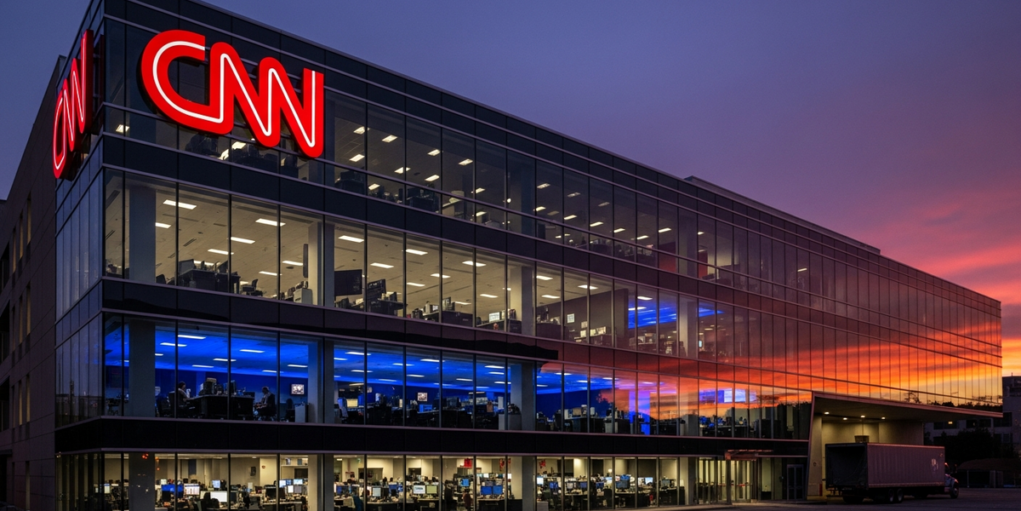
Somewhere inside CNN’s headquarters, a quiet dread is settling over the cubicles like fog rolling into a graveyard. Not because ratings are in the toilet — they’ve been there so long the network has a permanent seat. No, the fear is something far worse than low viewership.
Someone might make them be balanced.
The Dominoes
Netflix dropped out of the Warner Bros. Discovery bidding war, clearing the lane for Paramount Skydance to absorb the whole operation — and CNN along with it. Paramount already controls CBS, and when it took over that network, management installed Bari Weiss as editor in chief of CBS News.
If Paramount swallows Warners, the same philosophy — and possibly Weiss herself — could land at CNN. And for a newsroom that has spent a decade functioning as the Democratic Party’s in-house production company, that prospect is existential.
The Woman They Fear
Bari Weiss is 41 years old, runs a wildly successful media operation, and has the rare distinction of being hated by the far left and distrusted by chunks of the right — which, in today’s media landscape, is probably the strongest endorsement of credibility a person can get.
She’s pro-Israel. She’s against children undergoing irreversible medical procedures. She supports gay marriage but opposes men competing in women’s sports. She voted for Romney, then Clinton, then Biden. She calls herself a centrist and means it, which infuriates everyone who’s made a career out of demanding you pick a tribe.
When she took over CBS News, she told employees something so simple it practically qualifies as revolutionary in modern journalism: “We have to start by looking honestly at ourselves. We are not producing a product that enough people want.”
That sentence should be tattooed on the forehead of every cable news executive in America. It’s not ideological. It’s not partisan. It’s a business observation wrapped in common sense — your audience is shrinking because your product is broken. Fix the product.
Her prescription was equally straightforward: present people with the strongest voices on all sides of an issue and trust them to make up their own minds.
At CBS, that approach caused resignations. At CNN, it might cause a full evacuation.
The Brian Stelter Alarm
Brian Stelter — the man CNN brought back as its “chief media analyst” after previously letting him go, because apparently the network enjoys collecting things that don’t work — sounded the alarm in a Friday newsletter. He wrote that CNN employees and viewers have “serious concerns” about whether the network would maintain its “editorial independence” under Paramount.
“Editorial independence” is doing a lot of work in that sentence. What Stelter means is ideological uniformity. CNN’s newsroom doesn’t fear losing independence. They fear losing permission to operate as a one-sided megaphone. Independence would actually be an upgrade — it’s the balance part that terrifies them.
When your staff panics at the idea of presenting “the strongest voices on all sides,” the problem isn’t the new management. The problem is the culture that made one-sidedness the default.
The Weiss Paradox
Here’s what makes the CNN panic so revealing. Weiss isn’t a conservative. She’s not going to turn the network into Fox News. She voted for Hillary Clinton and Joe Biden. She supported Colin Kaepernick’s anthem protests. She wants abortion to remain legal. On a political spectrum, she’s left of center on most social issues.
But she committed the one unpardonable sin in progressive media — she insisted on fairness. She published voices the left wanted silenced. She left the New York Times after being called a Nazi by colleagues despite being Jewish. She built a media company on the radical premise that adults can handle hearing more than one perspective.
That’s what CNN is afraid of. Not a right-wing takeover. A fairness takeover. The idea that someone might walk into the newsroom and say, “We’re going to let conservatives make their case on air without a panel of four liberals waiting to call them liars” — that’s the nightmare keeping producers up at night.
What CNN Could Become
If Paramount completes the acquisition and applies the Weiss model to CNN, the network would face something it hasn’t experienced in years — a reason for people to watch.
CNN’s ratings are a disaster not because America doesn’t want news. Americans are desperate for news they can trust. The problem is that CNN long ago stopped being a news network and became a confirmation machine for people who already agreed with it. When you only speak to one audience, you shrink with that audience. And the progressive media audience has been shrinking for years because even liberals are getting tired of being lectured.
A CNN that presents multiple perspectives, features strong voices from across the spectrum, and trusts viewers to think for themselves wouldn’t just be better journalism. It would be better business. Weiss figured that out at CBS. The question is whether CNN’s entrenched culture will let anyone apply the same lesson.
The Bottom Line
The deal isn’t final. Regulatory hurdles remain. Democrats in Congress are already throwing fits about the Paramount-Warners merger for reasons that have nothing to do with antitrust and everything to do with narrative control. The road ahead is long and full of lawyers.
But the direction is clear, and CNN’s staff can see where it leads. A world where they might have to book guests they disagree with and let them finish a sentence. A world where “editorial independence” means actual independence, not a euphemism for ideological capture.
Bari Weiss told CBS employees to look honestly at themselves. CNN employees are looking at her and seeing their future.
And some of them are already heading for the exits — which, given what the network has become, might be the best thing that’s happened to journalism in a decade.